
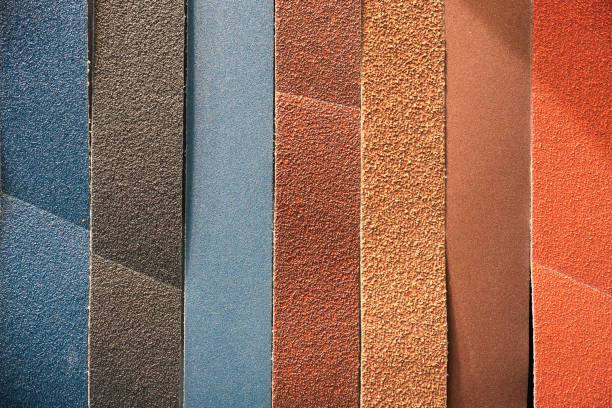
Types of Bonded Abrasives
Bonded abrasives consist of abrasive grains held together by a bonding agent. The main categories include:
Vitrified Bonds – Glass-like ceramic bonds that are hard, porous, and heat-resistant. Common in grinding wheels but not typically used for flexible products like sanding belts.
Resin Bonds – Synthetic polymer bonds that provide flexibility and shock resistance. These are widely used in sanding belts, cut-off wheels, and flap discs.
Rubber Bonds – Flexible bonds that allow for conformable grinding and polishing operations.
Metal Bonds – Used primarily for diamond and CBN wheels in precision grinding applications.
Sanding Belt Materials
For sanding belts specifically, the construction involves several key components:
Abrasive Grains
– Aluminium Oxide – Most common, good for wood, metal, and general-purpose applications
– Silicon Carbide – Harder and sharper, excellent for non-ferrous metals, glass, and stone
– Zirconia Alumina – Self-sharpening, ideal for heavy-duty metal removal
– Ceramic Alumina – Premium option for aggressive cutting and long life on stainless steel
Backing Materials
– Paper (A, C, D, E weights) – Lightweight, conformable, good for fine finishing
– Cotton Cloth (J, X, Y weights) – More durable and flexible than paper
– Polyester Cloth – Superior strength and heat resistance
– Film/Polyester Film – Ultra-smooth finish for precision applications
Bond Types for Belts
– Hide Glue – Traditional natural adhesive, still used for some woodworking applications
– Resin-over-Resin – Synthetic bond providing consistent performance and heat resistance
– Resin-over-Size – Size coat seals the backing; resin makes coat hold abrasive grains
Joint Types
– Butt Joint – Edges butted together, smoothest running
– Overlap Joint – More economical but creates a bump during operation
– Bias Joint – Cut at an angle for smoother operation than overlap

 🟢 Online | Privacy policy