
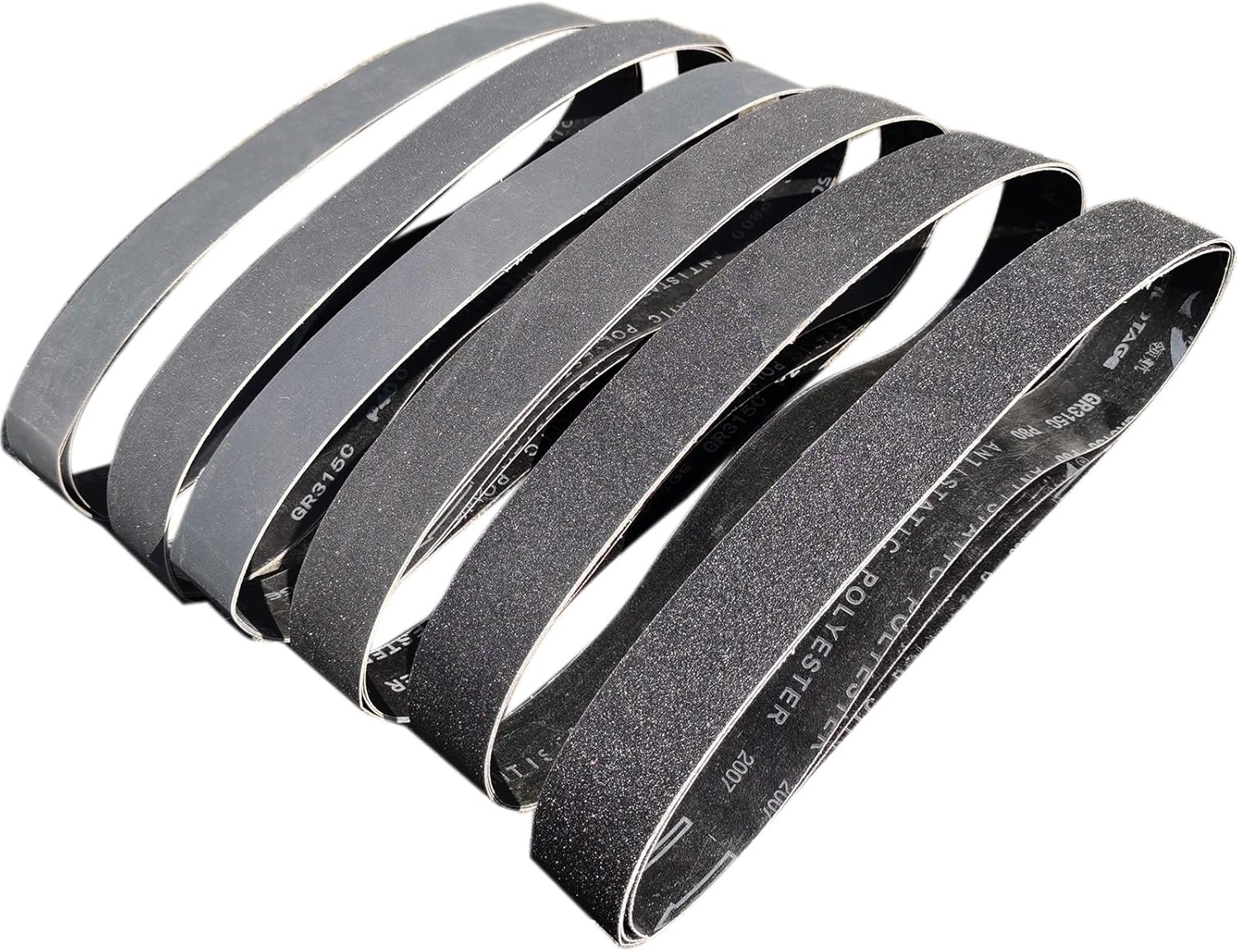
Silicon Carbide Sanding Belts
Silicon Carbide Sanding Belts: Uses and Applications
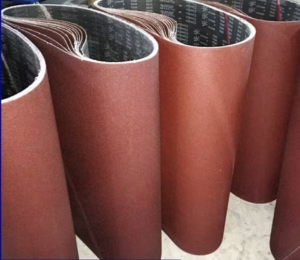
Silicon carbide sanding belts are engineered for aggressive cutting on hard and brittle materials. You’ll get sharp, consistent results with a uniform finish. These belts are best suited for applications where precision, speed, and surface quality matter.
What Makes Silicon Carbide Belts Different
- Harder and sharper than aluminium oxide
- Brittle grain that fractures easily, exposing new sharp edges
- Fast stock removal with a fine scratch pattern
- Performs well under low-to-medium pressure
Where You Can Use Silicon Carbide Sanding Belts
| Material Type | Common Applications |
|---|---|
| Wood (especially hardwoods) | Fine sanding, lacquer prep, finish removal |
| Glass | Edge smoothing, light shaping, scratch removal |
| Stone (marble, granite) | Honing, polishing prep, shaping |
| Ceramics | Deburring, surface finishing |
| Metals (non-ferrous) | Brass, copper, titanium—surface prep, burr removal |
| Plastic and composites | Clean finishing without melting, edge smoothing |
| Painted or coated surfaces | Paint stripping, feathering edges, finish sanding |
| Rubber | Shaping and surface texturing |
Industries That Rely on It
- Glass fabrication
- Stone and monument processing
- Furniture and cabinetry
- Automotive refinishing
- Metal polishing shops
- 3D printed part post-processing
- Composite and surfboard manufacturing
Available Options
You’ll find silicon carbide belts in various grits and backing types:
- Grit range: 24 (coarse) to 1200 (ultra-fine)
- Backing types: Cloth, waterproof polyester, paper
- Custom sizes: From handheld file belts to large wide belts for sanding lines
Best Practices
- Run belts at correct speed for the material—avoid excessive heat
- Use with proper contact wheels or platen supports
- Replace belts before the grain dulls to keep consistent finish quality
 🟢 Online | Privacy policy